 CODDY courses are certified in accordance with European standards and accredited by HiSTES (High School Teachers European Society)
 Coddy Donate is participant in the competition of projects in the field of social entrepreneurship "The best social project of the year-2022”
 CODDY is GOLD GLOBEE® WINNER in category Company of the Year | Franchise
 The charity project “Free coding classes for kids with special needs” is recognised as the Best social online project
 CODDY is official partner of Acer company
 CODDY is finalist of international award #MyVmeste 2022 in “Responsible business” nomination
 en
en
In a world where technology has become an integral part of daily life, programming has evolved from a specialized skill into a new form of literacy. Discover how early introduction to coding shapes your child's development and prepares them for a successful future in an increasingly digital world.
The world is changing at an unprecedented pace. What seemed like futuristic technology yesterday is now in every schoolchild's pocket. In this new reality, programming is becoming as fundamental as reading or writing—a new form of literacy essential for full participation in digital society.
Expert perspective:
"Learning to code is as important as learning to read. It's what the market and the new world demand. Programming has become part of the new literacy necessary for meaningful participation in modern society."
According to labor market research, by 2030, over 85% of in-demand jobs don't exist yet. But it's already clear that most will be technology-related. Kids coding education isn't just about preparing for an IT career—it's about developing universal competencies valuable in any field.
Programming education for children addresses a critical gap in traditional schooling. While schools teach consumption of digital content, coding education teaches creation—a fundamental shift from passive to active digital citizenship.
Let's explore seven key skills that early programming education develops, skills that will be in high demand in tomorrow's world.
Programming teaches children to think sequentially and systematically. Even when creating simple programs, kids learn to break complex tasks into manageable steps and arrange them in logical order.
Structured problem-solving approach — children learn to distinguish primary from secondary information, prioritize tasks, and organize thoughts coherently. This structured thinking extends beyond programming into academic subjects like mathematics, science, and even essay writing.
Understanding cause-and-effect relationships — programming requires children to think in terms of conditional logic: "if A happens, then B follows." This develops predictive thinking and helps children understand consequences before taking action.
Planning skills — to write a program, you must think through all steps in advance. This forward-thinking approach helps children become better planners in all aspects of life, from completing homework to organizing long-term projects.
Analytical abilities development — finding optimal solutions and analyzing various options becomes second nature. Children learn to evaluate different approaches, weigh trade-offs, and select the most efficient path forward.
Important consideration: algorithmic thinking isn't just for programmers. It helps structure information and make decisions in any field, from planning a school day to managing business processes. Harvard Business Review identifies algorithmic thinking as one of the most transferable skills in the modern economy.
At Coddy, we see how children studying programming begin applying algorithmic approaches not only when writing code but in everyday life—when preparing for exams, planning projects, even in routine tasks. This makes them more organized and effective.
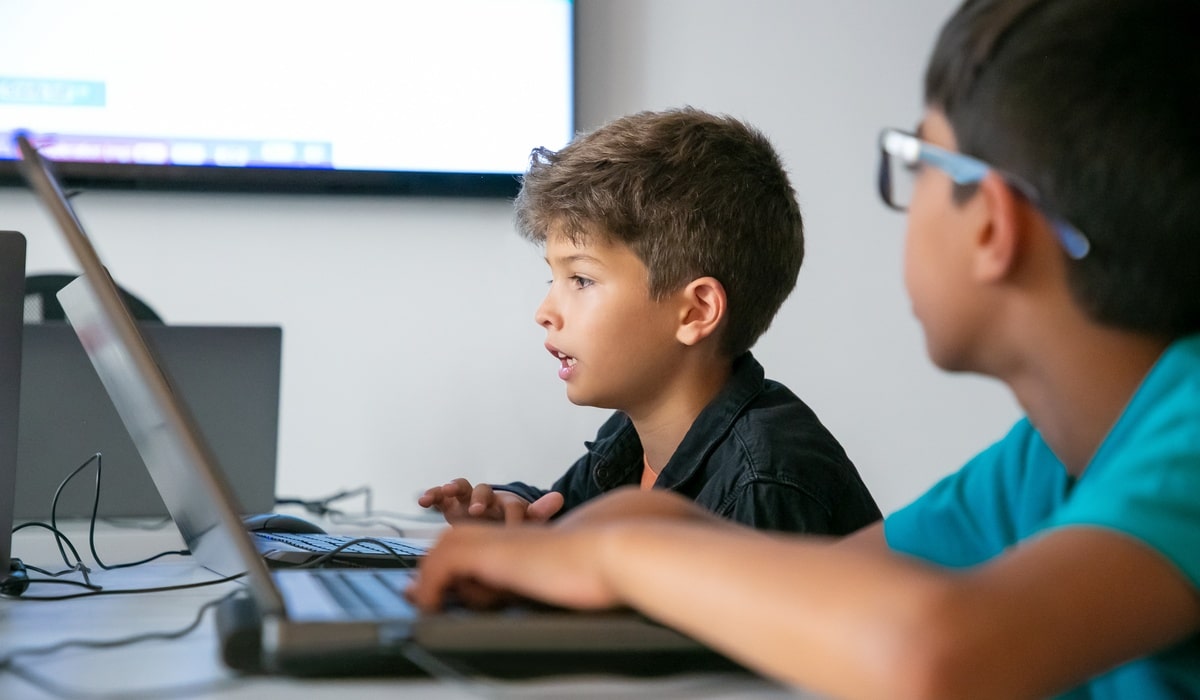
The skill of solving complex problems will help a child not only when writing programs, but also in everyday life.
Real-world impact:
Students who develop strong computational thinking perform better in mathematics, science, and standardized tests, regardless of whether they pursue tech careers. MIT research demonstrates that children who learn programming show 15-20% improvement in problem-solving skills across all subjects.
Programming is a continuous problem-solving process. Writing code that works perfectly on the first try is virtually impossible. Young programmers constantly face the need to find and fix errors, optimize solutions, and overcome obstacles.
Systems thinking — the ability to see problems holistically and understand interconnections between different elements. Programming naturally develops this capability as children must consider how different parts of their code interact and affect one another.
Decomposition — breaking down complex problems into simpler sub-problems is the cornerstone of programming. This skill translates directly to tackling any large challenge by dividing it into manageable pieces.
Finding multiple solutions — unlike traditional school problems with single correct answers, programming challenges often have numerous valid approaches. This teaches children to think flexibly and evaluate different solution strategies.
Optimization — choosing the most efficient solution from several options develops critical evaluation skills. Children learn to consider factors like speed, resource usage, and elegance when selecting their approach.
Debugging mindset — perhaps most importantly, programming teaches systematic debugging—the ability to identify where things went wrong and methodically test hypotheses about solutions. This scientific approach to problem-solving applies across disciplines.
Expert insight:
"Learning to code teaches children to think differently. When a program doesn't work, kids must investigate and devise solutions. They begin understanding new ideas and learn how to learn—developing meta-cognitive skills that accelerate all future learning."
Through programming, children encounter real challenges requiring application of knowledge from mathematics, physics, and logic.

This helps them see practical applications of school subjects and increases overall learning motivation.
Career preparation:
Problem-solving is consistently ranked as the number one skill employers seek. The World Economic Forum's Future of Jobs Report highlights it as critical for 2025 and beyond. Companies like Google specifically test for problem-solving ability in their hiring processes, valuing it above specific technical knowledge.
Contrary to popular belief, programming isn't just technical—it's creative work. Writing code is akin to composing music or creating art—it requires imagination, originality, and unconventional thinking.
Creating original projects — from simple games to complex applications, programming gives children a canvas for their ideas. Unlike consuming pre-made content, they become creators who can bring any concept to life through code.
Realizing ideas — the most powerful aspect of programming is its ability to transform abstract concepts into concrete, functional products. Children learn that imagination combined with skill can create real value.
Finding unconventional solutions — when standard approaches don't work, programmers must think creatively. This encourages divergent thinking—the ability to generate multiple innovative solutions rather than converging on a single obvious answer.
Project personalization — adding individual flair to programs teaches children that even technical work has room for personal expression. Whether through unique visual design, innovative features, or creative problem approaches, programming celebrates individuality.
Iterative refinement — creativity in programming isn't just the initial idea—it's the continuous process of refining and improving. Children learn that creative work evolves through multiple iterations, each improving on the last.
Success story:
"At Coddy, we encourage children to create unique projects rather than just copying ready-made solutions. Eight-year-old Alex started with a simple 'Catch the Mole' game, then modified it into a 'Space Defender' with unique rules and design. This shows how programming stimulates creative thinking and empowers children to become inventors."
Creativity developed through programming extends far beyond code creation. It helps children find innovative solutions in various life situations and becomes a valuable quality in any professional activity.
Innovation mindset: tech giants like Google and Apple actively seek creative problem-solvers who can think outside the box—skills cultivated through early coding exposure. Apple's co-founder Steve Jobs famously said, "Everybody in this country should learn to program a computer because it teaches you how to think."
Interdisciplinary connections:
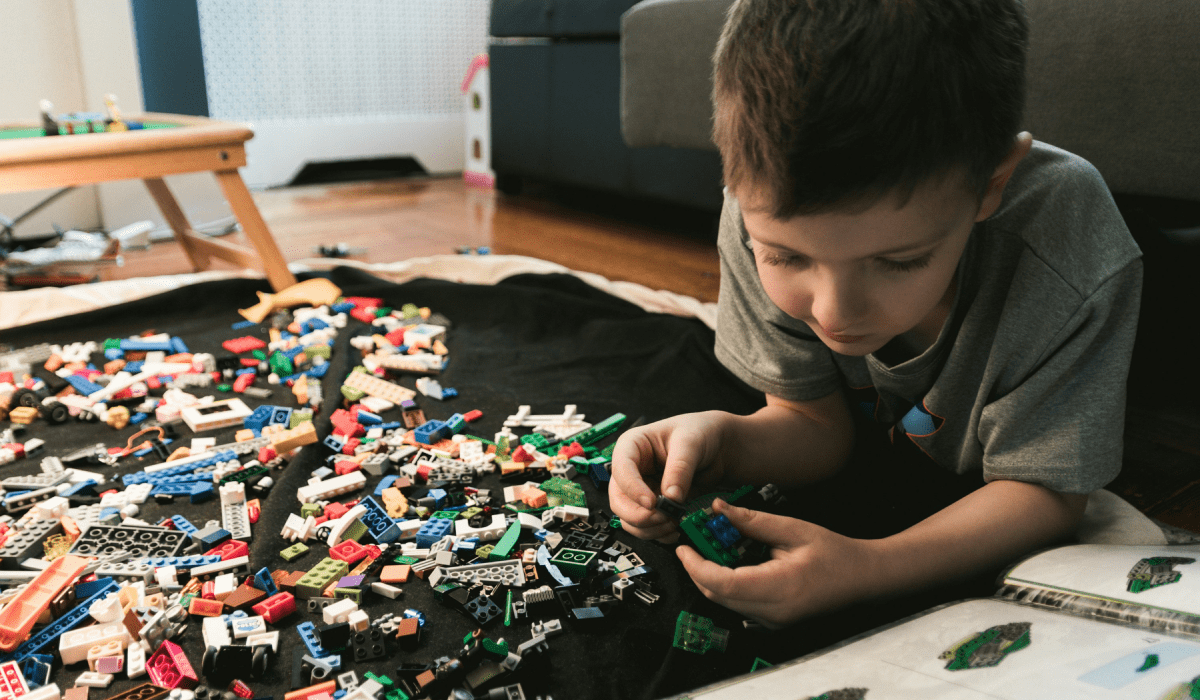
Programming creativity connects to other creative disciplines.
Children who code often excel in music (understanding patterns and sequences), art (digital design), writing (storytelling through interactive media), and mathematics (creative problem-solving).
In today's world, digital literacy has become essential. Learning programming helps children not just use technology but understand how it works from the inside.
Understanding principles of how digital devices and programs work — rather than seeing technology as magic, children who code understand the logic and structures underlying apps, websites, and software. This demystification builds confidence and curiosity.
Conscious and safe technology use —
Children who understand how technology works are better equipped to recognize risks, protect their privacy, and make informed decisions about digital tools. They understand data collection, algorithm biases, and security vulnerabilities.
Ability to evaluate information credibility — understanding how algorithms curate content helps children become critical consumers of digital information. They learn to question sources, recognize manipulation, and verify facts.
Capability to adapt to new technological tools — perhaps most valuable in our rapidly changing world, programming teaches meta-skills for learning any new technology. Children develop confidence that they can figure out unfamiliar tools through logical exploration.
Digital citizenship — programming education inherently includes discussions about responsible technology use, ethical considerations in software development, and the social impact of technology—preparing children to be thoughtful digital citizens.
Key insight:
Children studying programming transition from passive technology consumers to creators. This fundamentally changes their relationship with the digital world and increases awareness when using technology. They move from asking "How do I use this app?" to "How does this app work, and could I build something similar?"
At Coddy, we help children not only master technical skills but also develop responsible attitudes toward digital technologies. We teach them to critically evaluate information, follow digital safety principles, and maintain ethical standards online.

Failures are an integral part of learning programming, and coping with them is a necessary skill.
Safety first: in an era of cybersecurity threats and digital privacy concerns, understanding how technology works provides essential protection and informed decision-making abilities. Children who code are less susceptible to phishing, better understand privacy settings, and make smarter decisions about online sharing.
Academic advantage:
Digital literacy gained through programming correlates with improved performance across all subjects. Students leverage technology more effectively for research, collaboration, and presentation of ideas.
Programming is a process where mistakes and failures are integral parts of learning. Debugging code and finding solutions teach children not to fear errors but to perceive them as valuable experience and steps toward success.
Getting comfortable with iterative process — write code, test it, find bugs, fix them, repeat. This cycle normalizes failure as part of progress rather than evidence of inadequacy. Children learn that first attempts rarely succeed—and that's perfectly normal.
Understanding that errors aren't failures but normal parts of the learning process. Every programmer, from beginners to experts, encounters errors constantly. This reframes mistakes from shameful events to informative feedback.
Developing self-control and patience — debugging requires careful attention, systematic testing, and emotional regulation. Children can't rage-quit when code doesn't work—they must calmly identify and fix issues.
Building psychological resilience to difficulties — the repeated experience of encountering problems, persevering, and eventually succeeding builds genuine confidence. This isn't hollow "you can do anything" encouragement—it's earned self-efficacy based on overcoming real challenges.
Developing growth mindset — programming naturally cultivates what Stanford psychologist Carol Dweck calls "growth mindset"—the belief that abilities improve through effort. Each debugged error proves that skills develop through practice.
Result:
Children learning programming develop what's called a "growth mindset"—belief that abilities can be developed through effort and perseverance. This quality becomes key to success in any field. They learn to say "I can't do it yet" rather than "I can't do it."
The ability not to give up when facing difficulties is one of life's most valuable skills. At Coddy, we create a supportive environment where mistakes are viewed as growth opportunities, not reasons for disappointment. Our instructors celebrate debugging as much as success, teaching children that finding and fixing errors is progress.
Grit development:
Stanford research shows that "grit"—passion and perseverance for long-term goals—is a better predictor of success than IQ.

Programming naturally cultivates this trait through its inherent cycle of challenge, failure, learning, and eventual success.
Academic application:
Students who develop resilience through programming handle academic setbacks better. They're more likely to persist with difficult math problems, revise essays multiple times, and view challenging courses as growth opportunities.
Modern development is almost always a team process. By learning programming, children learn not only to write code but also to effectively interact with others, explain their ideas, and listen to colleagues' suggestions.
Ability to clearly articulate thoughts and ideas — programming requires precise communication. When asking for help or explaining code, vague descriptions don't work. Children learn to express complex ideas clearly and concisely.
Capability to work in teams on shared projects — collaborative coding teaches children to divide responsibilities, integrate different code modules, and coordinate timing—essential project management skills applicable to any group endeavor.
Skills in presenting ideas and work results — at Coddy, students regularly present their projects to peers, explaining their code, demonstrating functionality, and discussing challenges. This develops public speaking and presentation skills in a supportive context.
Constructive feedback and accepting criticism — code review—where others examine and critique your work—is standard practice in professional development. Children learn to give helpful feedback ("This function could be simplified") and receive criticism gracefully.
Technical communication — children learn to write clear comments in code, create documentation, and explain technical concepts to non-technical audiences—bridging the communication gap that many adult developers struggle with.
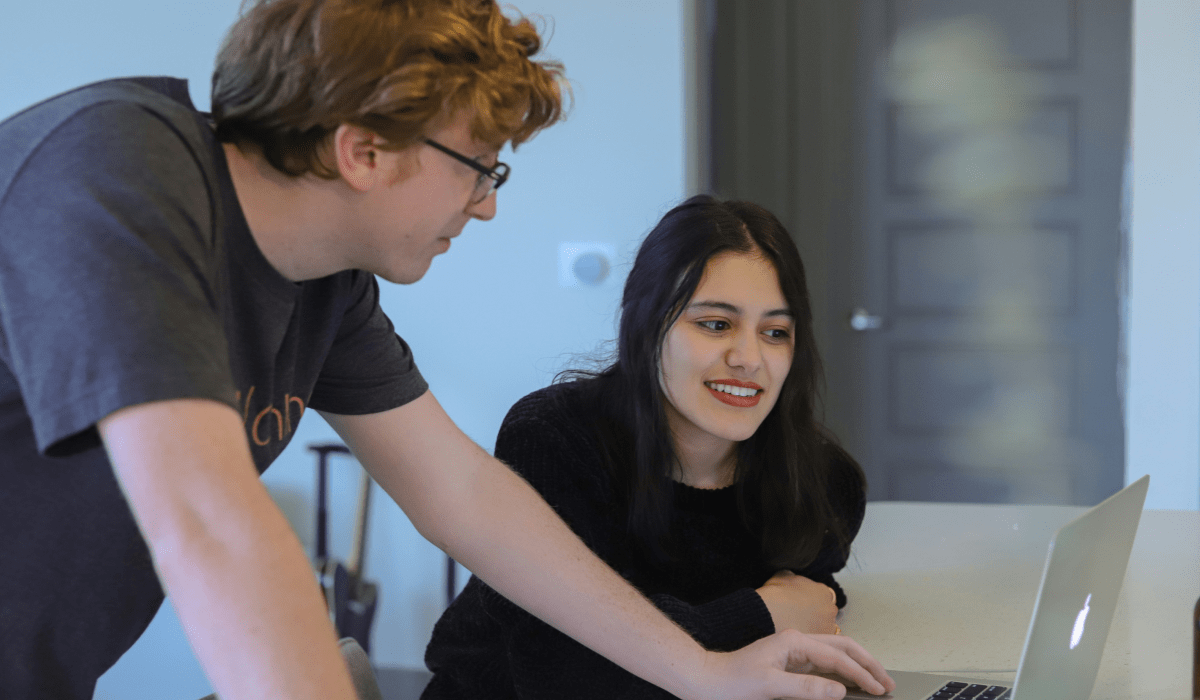
Peer learning — programming communities thrive on knowledge sharing.
Children learn to teach others what they know and to ask questions when they don't understand—building both confidence and humility.
Success story:
"At a Coddy hackathon, a team of four students of different ages (10-14 years) created an app to help with waste sorting. Each participant handled their part of the project, and success depended on coordinating actions. They not only won in their category but gained valuable teamwork experience that they later applied in school group projects and extracurricular activities."
In Coddy group projects, children learn to distribute responsibilities, consider each participant's opinion, and work together toward a common goal. These skills will be invaluable in their future careers, regardless of chosen profession.
Collaboration advantage: GitHub, the world's largest coding platform, has over 100 million developers collaborating. Early exposure to collaborative coding prepares kids for real-world tech environments where teamwork is essential. Most software development happens in teams, making collaboration skills as important as technical ability.
Cross-cultural communication:
Programming uses a universal language that transcends borders. At Coddy's international locations, children collaborate with peers from different countries, developing global perspectives and cross-cultural communication skills.
Early introduction to programming allows children to explore various IT aspects and better understand their interests and aptitudes long before choosing a profession.
Opportunity to try different directions — from web development to game creation, mobile apps to artificial intelligence, programming encompasses diverse specializations. Early exposure helps children discover which areas excite them most.
Understanding personal strengths and preferences — some children love the logic of backend programming, others prefer the visual creativity of frontend design, while others gravitate toward data analysis or game development. Early experimentation reveals natural inclinations.
Forming conscious approach to future career choice — rather than choosing careers based on vague impressions or parental pressure, children who code make informed decisions based on actual experience. They know whether they enjoy programming before committing to computer science degrees.
Creating project portfolio before finishing school — by high school graduation, young programmers can have impressive portfolios of completed projects—providing significant advantages in university admissions and internship applications.
Industry connections — through programming courses, hackathons, and competitions, children connect with mentors, industry professionals, and like-minded peers—building networks that prove valuable throughout their careers.
Entrepreneurial mindset — learning to build software teaches children they can create value from ideas. Many young programmers develop entrepreneurial thinking, recognizing opportunities to solve problems through technology.
Statistics:
According to labor market research, the IT sector continues to be among the highest-paying and most in-demand. In 2025, the most promising IT directions remain software development, systems analysis, data analytics, with mid-level specialists most sought after in the job market.
Education at Coddy gives children the opportunity not only to master technical skills but also to form understanding of various IT professions. Many of our graduates already have clear career visions by high school and purposefully move toward their goals.
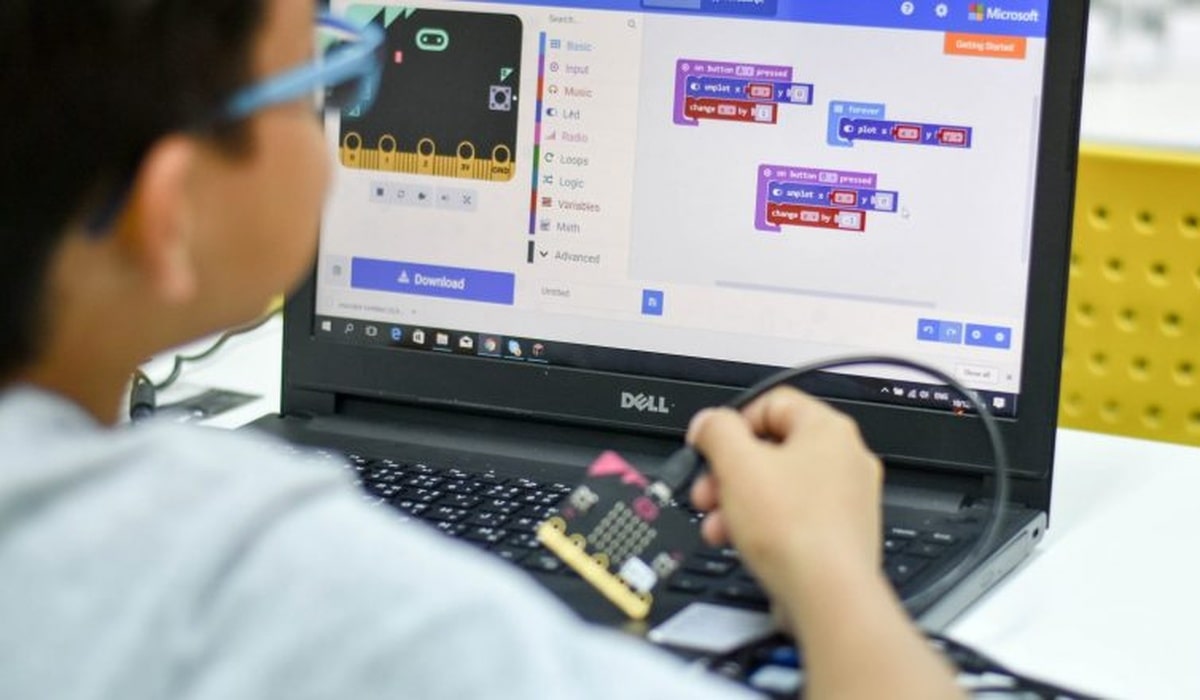
Start learning programming from an early age, and there are many tools for this purpose that make studying comfortable.
Future-proof careers: The U.S. Bureau of Labor Statistics projects software developer jobs will grow 22% from 2020 to 2030—much faster than average for all occupations. Computer science careers consistently rank among the highest-paying and most stable professions.
Beyond IT careers: even children who ultimately choose non-technical careers benefit from programming experience. Understanding technology is valuable for entrepreneurs, scientists, designers, business leaders, educators, and professionals in virtually every field.
One of the most common parent questions: "Isn't my child too young to learn programming?" Various opinions exist, but experience shows that introducing children to algorithmic thinking basics is possible from an early age.
Ages 5-7: foundation Stage
Introduction to visual programming environments (Scratch Jr), robotics, game-based learning. At this age, children develop pre-coding skills through activities that teach sequencing, pattern recognition, and basic logic without requiring reading or typing proficiency.
Example activities include unplugged coding games (no computer required), simple robot programming with picture-based commands, and drag-and-drop block coding that introduces loops and conditionals through play.
Ages 8-10: Exploration Stage
Scratch, basic algorithms, creating simple games and animations. Children at this age can handle more complex projects, understand variables, and create their own game mechanics. They begin thinking like programmers—planning before coding and systematically debugging problems.
Typical achievements include creating animated stories, designing multi-level games, and beginning to understand how professional games and apps are built.
Ages 11-13: Transition Stage
Transition to text-based programming languages (Python), creating more complex projects. Pre-teens can grasp abstract concepts, work with more sophisticated logic, and begin understanding professional programming practices like functions, data structures, and object-oriented concepts.
Projects at this level include web development, data visualization, artificial intelligence basics, and mobile app prototypes.
Ages 14+: Specialization Stage
In-depth language study, specialization, working on comprehensive projects. Teenagers can learn professional-grade programming, contribute to real open-source projects, and develop portfolio-worthy applications. Many begin preparing for computer science studies or even freelance work.
Advanced students explore specialized areas like machine learning, cybersecurity, game engine development, or backend web development.
Key point:

What matters isn't so much age as individual characteristics and the child's interests. The main thing is making the first programming experience engaging and accessible to inspire continued learning.
Factors to consider:
At Coddy, we offer programs for children of different ages, starting from 4 years old. Each program is adapted to age-specific features and built in game format, making learning engaging and effective.
Developmental readiness:
Research from MIT and Tufts University shows that children as young as 5 can understand basic programming concepts when taught through age-appropriate visual tools. The key is matching teaching methods to developmental stages, not waiting for arbitrary age milestones.
Never too late:
While early exposure provides advantages, it's never too late to start. Many successful programmers began in their teens or even adulthood. The important factor is sustained interest and practice, not early start age.
Since 2016, Coddy International Programming School has helped children worldwide master modern technologies and develop 21st-century skills. Our approach combines fundamental knowledge with practical skills, allowing children not only to learn programming but also to apply acquired knowledge to create real projects.
Over 100 courses in various directions — programming, design, digital security, game development, web development, mobile app creation, artificial intelligence, robotics, and more. This diversity allows children to explore different paths and find their passion.
Diverse learning formats — group classes for collaborative learning, individual lessons for personalized attention, intensive boot camps for accelerated progress, and summer camps that combine coding with traditional camp activities.
Project-based approach — children create real projects for their portfolios, not just complete exercises. Every course culminates in a completed project that demonstrates mastery—whether it's a mobile app, game, website, or AI application.
Experienced practitioner instructors — our teachers aren't just educators—they're working professionals from leading IT companies who bring real-world experience into the classroom. They teach not just syntax, but professional practices and industry standards.
International environment — school branches operate in 28 countries worldwide, creating a global learning community. Students can collaborate with peers from different cultures, preparing them for the international nature of modern tech work.
Proven track record — thousands of successful graduates now pursuing tech careers, many accepted to prestigious universities with scholarship offers. Our alumni work at major tech companies and have founded successful startups.
Industry recognition — partnerships with Microsoft, Google, Unity, and other leading technology companies ensure our curriculum reflects current industry needs and provides students with recognized certifications.
Supportive learning environment — we maintain small class sizes, typically 8-12 students per instructor, ensuring individual attention. Our teaching philosophy emphasizes celebration of effort, normalization of mistakes, and cultivation of genuine curiosity.
Continuous curriculum updates — technology evolves rapidly, and so does our curriculum. We regularly update courses to reflect new programming languages, emerging technologies, and industry best practices.
"My son (11 years old) always spent lots of time on the computer, mostly playing games. After six months at Coddy, he still enjoys computer time, but now creates his own games and mobile apps! I'm glad his hobby transformed into something useful that could become his future career. More importantly, his problem-solving skills improved across all his schoolwork, and he's more confident tackling challenges."

We believe programming isn't just a set of technical skills but a tool for developing thinking, creativity, and self-expression. At Coddy, we create an environment where children aren't afraid to experiment, make mistakes, and find their unique solutions.
Programming is the language of the future, and the earlier a child begins learning it, the better prepared they'll be for tomorrow's challenges. This isn't just an investment in a future career—it's forming a mindset that will help successfully adapt in a constantly changing technological world.
Real technical skills in coding and problem-solving — mastery of programming languages, understanding of algorithms, ability to build functional applications—concrete competencies that open doors to opportunities.
Completed projects for their portfolio — tangible evidence of abilities that impresses university admissions officers, scholarship committees, and future employers. While other applicants list "interested in computers," your child can demonstrate actual creations.
Critical thinking and complex problem-solving abilities — skills that transfer to every academic subject and life challenge. These meta-cognitive abilities provide advantages far beyond technology.
Like-minded friends and mentor connections — a community of peers who share interests and passions, plus relationships with professional mentors who can provide guidance and opportunities throughout their educational journey and career.
Confidence that technology is understandable and accessible — rather than being intimidated by technology's complexity, children who code develop confidence that they can figure things out, learn new tools, and create solutions.
Insight into interests and potential career paths — early exposure helps children discover aptitudes and passions before major educational commitments, enabling more informed decisions about studies and careers.
Preparation for high-demand, high-paying careers — the IT sector offers some of the best employment prospects and compensation in the modern economy. Programming skills open doors to financial security and career satisfaction.
Skills that transcend technology—valuable in any field — even if your child ultimately chooses a non-technical career, the problem-solving, logical thinking, creativity, and resilience developed through programming provide lifelong advantages.
Technology's role in society will only increase. The children who understand how to create technology—not just consume it—will be tomorrow's leaders, innovators, and problem-solvers.
Don't let your child be left behind in the digital revolution. While others consume technology, your child can create it.
What We Offer:
Modern facilities with cutting-edge equipment — computer labs with up-to-date hardware and software, creating professional development environments where children can work with the same tools used by industry professionals.
Curriculum developed by industry professionals — our courses are designed by working programmers and vetted by educational experts to ensure they're both current and age-appropriate.
Specialized tracks including AI and game development — whether your child dreams of creating games, building websites, developing mobile apps, or exploring artificial intelligence, we have pathways to match their interests.
Experienced mentors who inspire young minds — teachers who are passionate not just about code but about education, who remember what it's like to be a beginner, and who celebrate every breakthrough.
Real projects students take home — no busywork or pointless exercises—every course produces something tangible that students are proud to show family and friends.
Certificates and materials for continued learning — official documentation of skills acquired, plus resources for students who want to continue learning independently.
International community of young programmers — connection to a global network of young coders, opportunities for international collaborations and competitions.
Schedule a Free Trial Class — Experience our teaching approach firsthand, meet our instructors, and see if Coddy is the right fit for your child.
Explore Our Courses — Browse our comprehensive catalog of programming courses for all ages and interests.
Download Our Course Catalog — Get detailed information about our programs, schedules, and pricing.

Speak with an Education Consultant — Discuss your child's interests, experience level, and goals with one of our education advisors who can recommend the perfect starting point.
Use this checklist to assess your child's readiness:
Age 4+ — Can follow multi-step instructions and complete tasks requiring sequence memory.
Interest — Shows curiosity about how things work, asks questions about technology, or enjoys building and creating.
Basic computer skills — Can use a mouse and keyboard comfortably, or can learn these skills alongside programming (for visual block coding).
Problem-solving interest — Enjoys puzzles, logic games, strategy games, or figuring out how things work.
Persistence — Willing to try again after initial failure rather than giving up immediately when something doesn't work.
Creativity — Enjoys building or creating things, whether with LEGO, art supplies, Minecraft, or other constructive activities.
Screen time available — Has access to computer or tablet for learning (though this can be provided through in-person classes if necessary).
Prior programming experience — We start from the beginning and assume no previous knowledge.
Advanced math skills — While math helps, especially for older students, beginning programming requires only basic arithmetic.
Perfect grades — Programming skills don't correlate perfectly with traditional academic performance. Many students who struggle in conventional school excel at coding.
Expensive equipment — We provide all necessary computers and software during classes. For home practice, any modern computer suffices.

Tech-savvy parents — You don't need to know programming to support your child's learning. We provide guidance for parents and handle all technical instruction.
Question: Will learning programming make my child antisocial?
Answer: Quite the opposite. Our collaborative projects, hackathons, and team activities develop strong social skills. Programming today is highly collaborative—professional developers spend significant time communicating with teammates, explaining ideas, and working in groups.
Additionally, tech literacy helps kids communicate better in our digital world. They understand the platforms their peers use, can create content to share, and often become sought-after friends who can help others with technology.
Many parents report that their previously isolated children found community through programming, connecting with like-minded peers who share their interests.
Question: What if my child loses interest?
Answer: We make coding fun through game development, creative projects, and age-appropriate challenges. Our 95% completion rate speaks to our engaging curriculum.
However, it's normal for children's interests to evolve. Some students take a break and return later with renewed enthusiasm. Others discover through coding courses that a different tech field (like design or video production) suits them better. Any exposure to technology and computational thinking provides value, even if your child doesn't become a programmer.
We also offer diverse courses, so if one area doesn't captivate your child, another might. The student who finds web development boring might love game programming or robotics.
Question: Can girls succeed in programming?
Answer: Absolutely. We actively encourage female students and have numerous success stories. Currently, 40% of our students are girls, and they often excel in our programs.
The tech industry has historically been male-dominated, but this is changing rapidly. Many companies actively seek to diversify their teams, creating excellent opportunities for women in technology. Some of the most influential programmers in history were women, including Ada Lovelace (first computer programmer) and Grace Hopper (pioneering computer scientist).
At Coddy, we create inclusive environments where all students feel welcome and supported. We showcase female role models in technology, address stereotypes explicitly, and ensure our teaching approach engages all students equally.
Question: Is online learning as effective as in-person?
Answer: Our hybrid model offers flexibility, and both formats include live instruction, real-time feedback, and collaborative projects. Many families prefer online for convenience—no commute, comfortable home environment, and flexibility for busy schedules.
Online learning has unique advantages: screen sharing allows instructors to see exactly what students see and provide precise guidance. Students can revisit recorded sessions for review. International collaboration becomes possible.
In-person learning offers benefits too: hands-on activities with physical robotics kits, spontaneous peer interaction, and dedicated learning environment without home distractions.
We've found that learning outcomes are similar across formats when teaching quality remains high. The best format depends on individual student preferences, learning styles, and logistical considerations.
Question: How much does it cost?
Answer: We offer various packages to fit different budgets, with financing options available. Pricing varies by location, course type, and format (group vs. individual, online vs. in-person).
As a general guide, group courses typically cost less per session than individual instruction, while providing valuable peer collaboration. Intensive boot camps and specialized courses may have different pricing structures.
We encourage interested families to book a free consultation to discuss pricing and find the right fit. We can explain various package options, payment plans, sibling discounts, and scholarship opportunities that might apply.
Question: What programming languages do you teach?
Answer: We teach a progression of languages appropriate to age and experience level:
The specific language matters less than developing computational thinking. Once students understand programming concepts in one language, learning others becomes much easier.
Question: How do I know if my child is making progress?
Answer: Progress manifests in multiple ways:
We provide regular progress reports, showcase student work in presentations, and maintain portfolios of completed projects so parents can see tangible growth.
Question: Can programming help my child in school?
Answer: Absolutely. Students who learn programming often see improvements across academic subjects:

Additionally, programming projects provide excellent material for college applications, demonstrating initiative, technical skills, and creative thinking.
In an increasingly digital world, programming literacy is no longer optional—it's essential. By starting early, your child gains not just technical skills but critical thinking abilities, creativity, problem-solving prowess, and resilience that will serve them throughout life.
The benefits extend far beyond potential tech careers. Programming develops fundamental cognitive skills applicable to any field—from medicine to business, education to entrepreneurship. It teaches systematic thinking, attention to detail, creative problem-solving, and persistence through challenges.
Early exposure provides advantages that compound over time. A child who begins programming at 8 has nearly a decade of experience by college application time—time to explore different specializations, build impressive portfolios, and develop genuine expertise.
The opportunity cost of waiting is significant. Technology evolves rapidly, and early familiarity helps children stay current rather than playing catch-up. The confidence that comes from understanding technology—from being creators rather than mere consumers—shapes how children approach the world.
The future belongs to creators, not just consumers of technology. Give your child the tools to shape tomorrow.
Programming isn't about turning every child into a software engineer.

It's about providing capabilities to understand and influence an increasingly technological world. It's about developing problem-solving skills that transfer to any challenge. It's about building confidence that "I can figure this out."
In 10 or 20 years, when your child enters the workforce, the specific languages and tools they learned may have changed. But the thinking patterns, problem-solving approaches, and confidence in their ability to learn new technologies will remain invaluable.
The question isn't whether your child should learn programming, but when they'll start and how you'll support their journey.
Book a free trial class this month and receive:
No obligation, no pressure — just an opportunity to experience Coddy's teaching approach and see if it's the right fit for your child.
The trial class includes:
Spaces are limited to maintain our small class sizes, so early registration is encouraged.
Claim Your Free Trial Class Now
How to Support Your Child's Programming Journey (Even If You Don't Code)
Red Flags to Watch For
While learning to code has many benefits, watch for these potential issues:
Balancing Screen Time
Programming requires computer time, but balance remains important:
Our Mission
Coddy exists to democratize technology education, making high-quality programming instruction accessible to children worldwide regardless of background or location. We believe every child deserves the opportunity to become a creator of technology, not just a consumer.
Our Values
Excellence in Education — We maintain the highest standards in curriculum design, instructor quality, and student outcomes. Continuous improvement drives everything we do.
Inclusive Environment — Students of all backgrounds, genders, abilities, and starting points are welcome and supported. We actively work to make technology education accessible and welcoming to groups historically underrepresented in tech.
Project-Based Learning — Theory matters, but application matters more. Students learn by building real projects that they care about, not by completing abstract exercises.
Growth Mindset — We celebrate effort, progress, and learning from mistakes. Challenges are opportunities, and errors are valuable feedback, not failures.
Global Perspective — Technology connects the world, and our international community reflects this reality. Students gain exposure to diverse perspectives and global collaboration.
Ethical Technology — We teach not just how to build technology but also responsibility, ethics, and awareness of technology's social impact.
Joy in Learning — Programming should be engaging and fun. When students enjoy learning, they learn better and develop lasting passion for the subject.
Help other parents discover the benefits of early programming education. The more children who gain these essential skills, the better prepared the next generation will be to tackle tomorrow's challenges.
When you share this article, you're not just forwarding information—you're potentially changing a child's future trajectory. Every student we reach is one more young mind equipped with the tools to create, innovate, and succeed in our technological world.
Share on:
The decision to introduce your child to programming is an investment in their future that pays dividends across all areas of life. The skills developed through coding—logical thinking, creative problem-solving, resilience, collaboration—are precisely the capabilities that will distinguish successful individuals in an increasingly complex and technological world.
You don't need to understand programming yourself to support your child's learning. What matters is recognizing the value of these skills and providing opportunities for your child to explore, create, and grow.
The children learning to code today are preparing to not just exist in tomorrow's world but to shape it. They'll be the innovators, entrepreneurs, problem-solvers, and leaders who design the technologies, businesses, and solutions that define the future.
Every major breakthrough in human history has come from people who refused to accept the status quo—who saw problems and imagined solutions, who possessed both the creativity to envision change and the technical skills to implement it.

Programming gives children both: the creative freedom to imagine what could be and the technical capability to bring those visions to life.
The future is being coded right now. Give your child a seat at the table where tomorrow is being designed.
The journey of a thousand miles begins with a single step. Take that step today.