 CODDY courses are certified in accordance with European standards and accredited by HiSTES (High School Teachers European Society)
 CODDY is official partner of Acer company
 Coddy Donate is participant in the competition of projects in the field of social entrepreneurship "The best social project of the year-2022”
 CODDY is finalist of international award #MyVmeste 2022 in “Responsible business” nomination
 The charity project “Free coding classes for kids with special needs” is recognised as the Best social online project
 CODDY is GOLD GLOBEE® WINNER in category Company of the Year | Franchise
 en
en
What if your child could learn to code without writing a single line of complex syntax? That’s the magic of block-based coding, a visual approach that has revolutionized how kids learn to program.
Instead of typing out commands, kids simply drag and drop colorful blocks that snap together like digital LEGOs. This intuitive method removes the biggest barrier for beginners — frustrating syntax errors — and lets them focus on what really matters: logic, creativity, and problem-solving.
Think of it as a puzzle. Each block represents a command, a function, or a piece of logic. The shapes and colors of the blocks give kids visual clues about how they work.
This system is designed to be intuitive. If two blocks don’t make logical sense together, they won’t snap into place. This provides immediate feedback and prevents errors, allowing kids to experiment freely without getting stuck.
"Block-based programming is the bridge between play and serious coding. Kids learn to think like programmers without getting bogged down by syntax." — MIT Media Lab Researcher
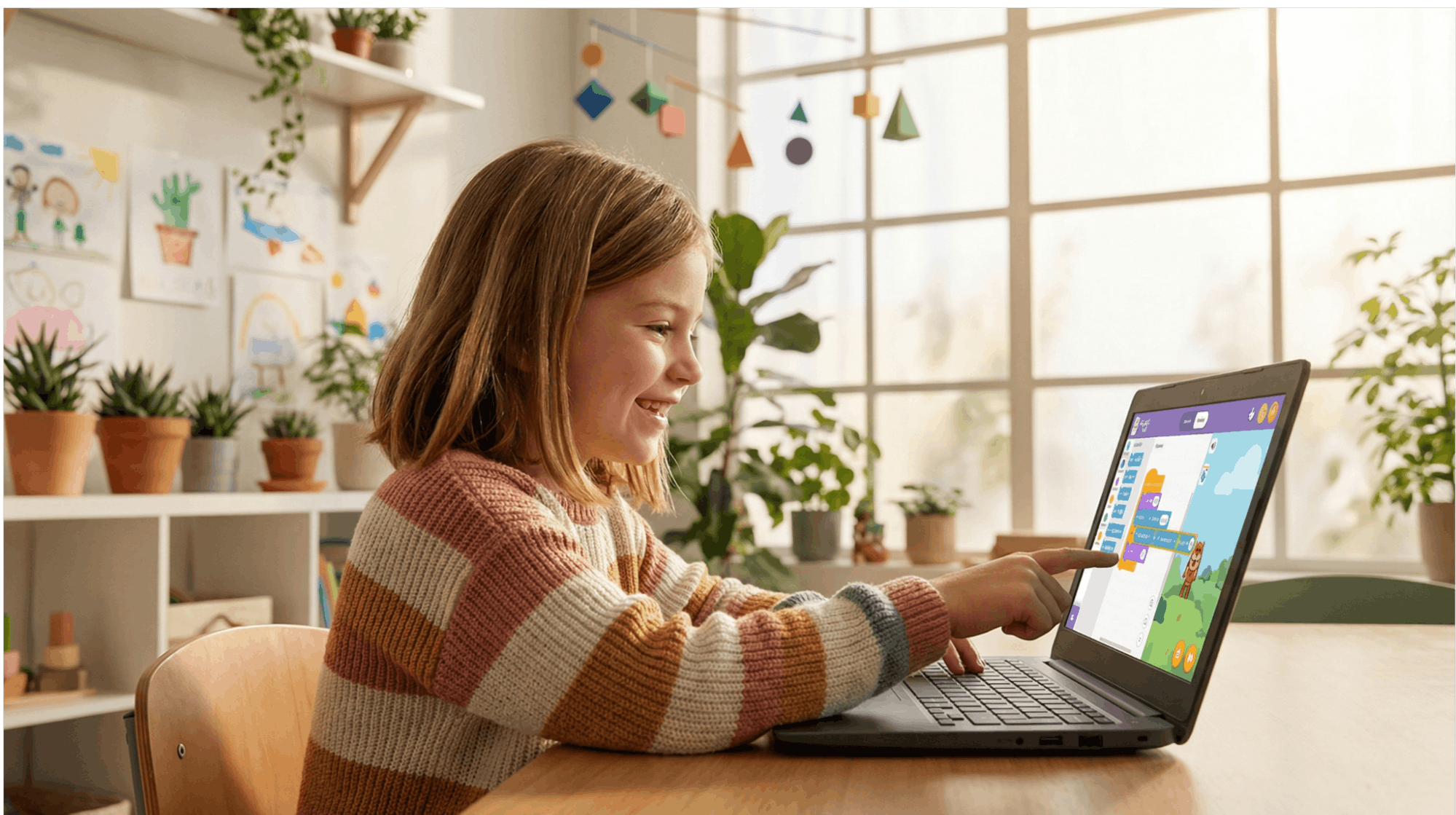
Developed by MIT, Scratch is the most popular block-based coding platform in the world, and for good reason. It’s a free, creative, and powerful tool that makes programming accessible for kids ages 7-12.
In Scratch, kids bring characters called "sprites" to life by snapping together code blocks. They can build their own games, animations, and interactive stories, turning their wildest ideas into reality.
What can kids create with Scratch?
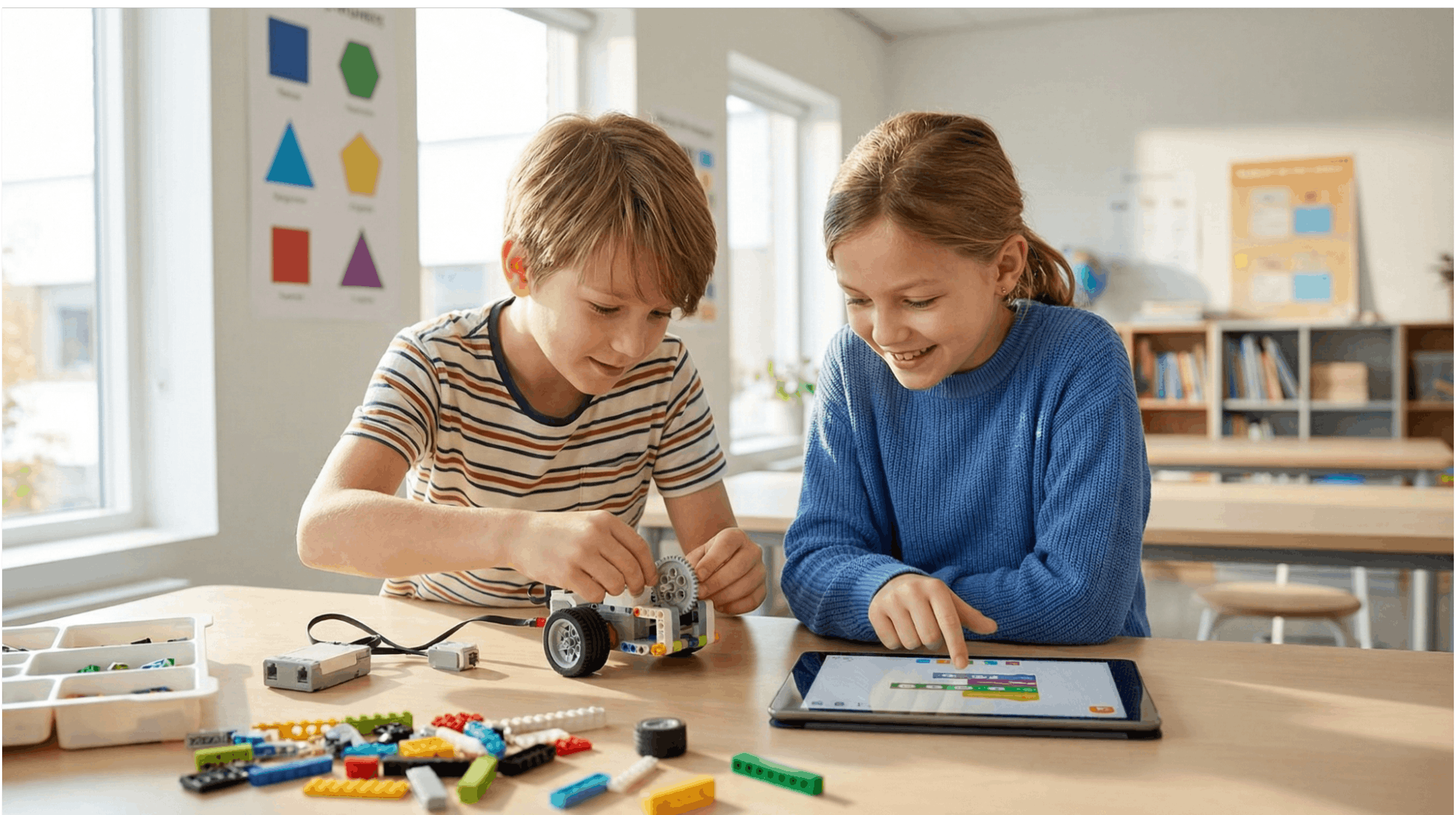
Block-based coding isn’t just for the screen. With educational robotics kits like LEGO WeDo 2.0, kids can use the same drag-and-drop principles to control real-world robots.
They build a robot using familiar LEGO bricks and then program its motors, sensors, and lights. This brings their code to life in a tangible way, teaching them the fundamentals of mechanics and automation.
The Top 3 Benefits of Block-Based Coding
Absolutely. While it looks like a game, block-based coding teaches the same fundamental concepts used in text-based languages like Python and JavaScript:
Mastering these concepts in a visual environment creates a strong foundation, making the transition to text-based coding much smoother later on.
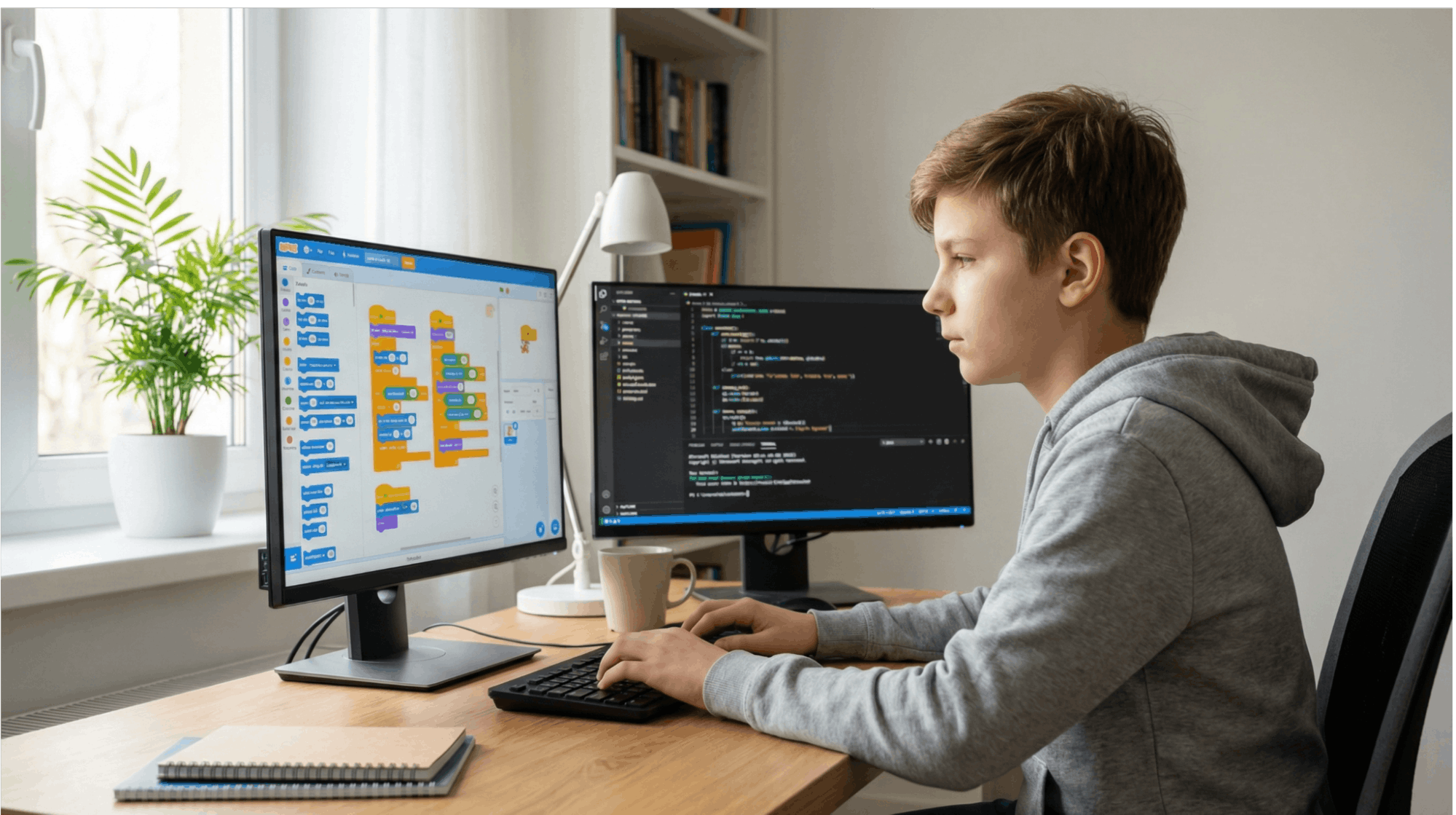
Block-based programming is the perfect first step into the world of technology. It’s fun, engaging, and packed with educational value.
At CoddySchool, our courses are designed to make learning to code an adventure. Led by experienced instructors, our project-based classes in Scratch and robotics empower kids to build their own unique projects from day one.
Give your child the tools to build the future. Sign up for a trial lesson today!
→ Explore Our Scratch Courses
→ Discover Our Robotics Programs
Read also:
No-Code Platforms 2026: How Kids Are Building Apps Without Programming