 Coddy Donate is participant in the competition of projects in the field of social entrepreneurship "The best social project of the year-2022”
 The charity project “Free coding classes for kids with special needs” is recognised as the Best social online project
 CODDY courses are certified in accordance with European standards and accredited by HiSTES (High School Teachers European Society)
 CODDY is GOLD GLOBEE® WINNER in category Company of the Year | Franchise
 CODDY is official partner of Acer company
 CODDY is finalist of international award #MyVmeste 2022 in “Responsible business” nomination
 en
en
Your child already interacts with AI agents daily - they just don't know it.
When Spotify suggests a new song, that's an AI agent. When a video game enemy adapts to how your kid plays, that's an AI agent. When Alexa answers a question, that's an AI agent.
Simple definition:
An AI agent is a program that can observe its environment, make decisions, and take actions - without a human telling it exactly what to do every step of the way.
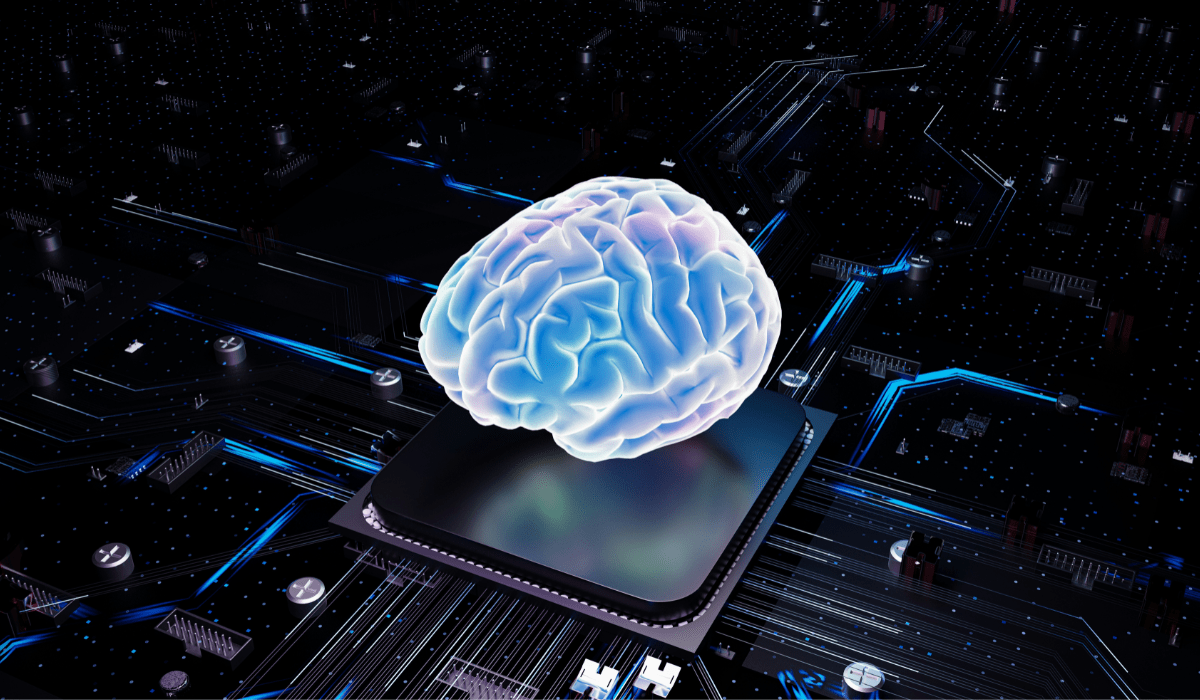
Artificial intelligence - the digital brain of the future.
Unlike regular software that follows fixed instructions, AI agents can:
This is the technology reshaping every industry. Kids who understand it will have a serious advantage.
Every AI agent has four basic parts:
Component | What It Does | Example |
Sensors | Collects information | Camera, microphone, data feed |
Brain | Processes information and decides | Neural network, decision rules |
Memory | Stores knowledge and experience | Database, learned patterns |
Actuators | Takes action | Screen output, robot movement, API call |
Think of it like this:
A self-driving car uses cameras (sensors) to see the road, a computer (brain) to decide what to do, maps and past trips (memory) to know where to go, and steering/brakes (actuators) to actually drive.
The "intelligence" comes from how the brain component is designed - and whether it can learn and improve over time.
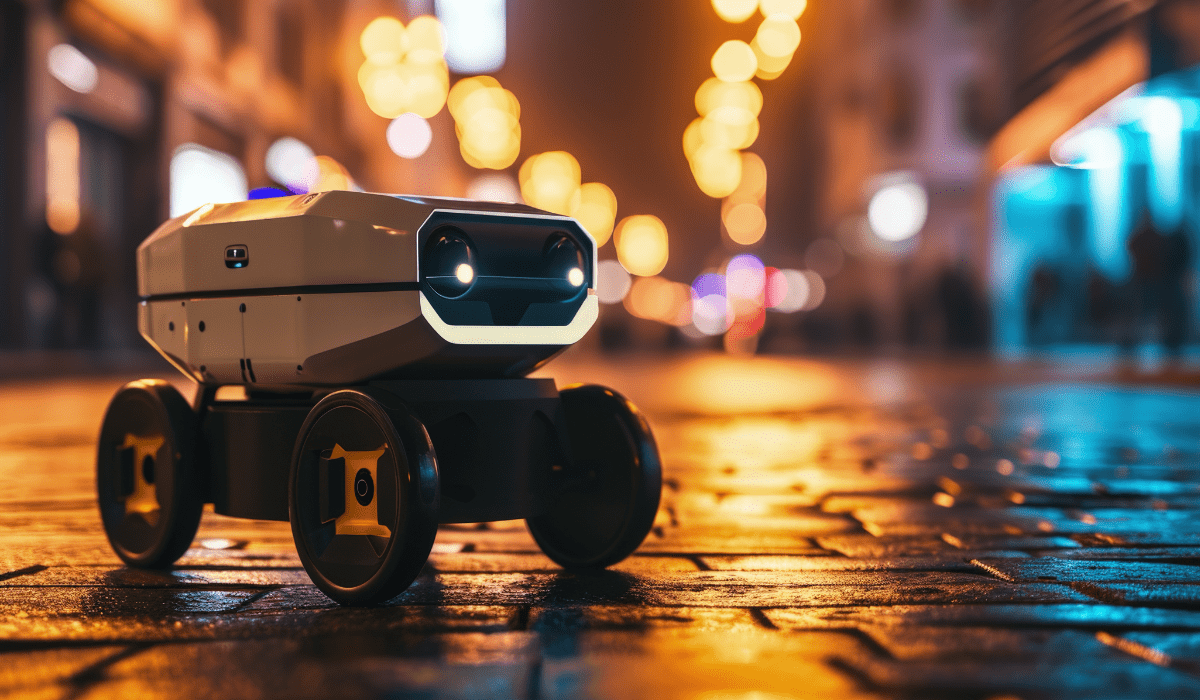
Types of AI agents: chatbots, robots, game characters, and smart assistants.
Simple Reactive Agents
Model-Based Agents
Goal-Oriented Agents
Learning Agents
Virtual Assistants
Siri, Alexa, Google Assistant. They understand speech, answer questions, control smart devices, and learn your preferences.
Chatbots
Customer service bots, ChatGPT, character.ai. They have conversations, answer questions, and help solve problems.
Game AI
NPCs in video games, opponents in strategy games. They create challenge, adapt to player skill, and make games feel alive.
Autonomous Robots
Roomba vacuums, warehouse robots, self-driving cars. They navigate physical space and complete real-world tasks.

AI agents manage a smart home: comfort and security.
Smart Home
Entertainment
Transportation

Virtual tutors help children learn more effectively.
This is where it gets exciting for kids:
AI tutors adapt to each student's pace and style. Struggling with fractions? The AI gives more practice. Racing ahead? It moves to harder problems.
Instant Feedback
AI can check work immediately—not just right/wrong, but explaining why and suggesting improvements.
24/7 Help
AI tutors don't sleep. Kids can get help with homework at any hour.

AI agents automate data production and analysis.
Customer Service
Chatbots handle routine questions, freeing humans for complex problems.
Healthcare
AI agents analyze medical images, predict patient risks, and assist in diagnosis.
Cybersecurity
AI monitors networks 24/7, detecting threats faster than any human could.
Finance
Trading algorithms, fraud detection, credit scoring - all powered by AI agents.

The first steps in creating an AI agent.
Creating AI agents sounds intimidating, but kids can start with surprisingly simple projects.
1. Define the Problem
What should the agent do? "Answer questions about homework" or "play tic-tac-toe" or "recommend books I might like."
2. Choose the Approach
3. Build and Train
Write the code, feed it data (if using ML), test and improve.
4. Test and Iterate
Does it work? Where does it fail? Fix and repeat.
Python is the go-to language for AI. It's readable, powerful, and has incredible libraries:
For beginners, visual tools and simplified environments make it easier:

Children create their own AI agents in the classroom.
Difficulty: beginner
What it does: Answers questions like "What class do I have Monday?" or "When is math?"
Skills learned:
Difficulty: intermediate
What it does: Plays tic-tac-toe and never loses (or rarely loses)
Skills learned:
Difficulty: intermediate
What it does: suggests books based on what you've already liked
Skills learned:
Difficulty: advanced beginner
What it does: recognizes objects in photos (cats vs dogs, types of plants, etc.)
Skills learned:

Career prospects in AI: professions of the future.
Understanding AI agents opens serious career doors.
AI/ML Engineer
Builds and deploys AI systems. High salaries, huge demand, remote-friendly.
Data Scientist
Analyzes data and creates predictive models. Works across every industry.
AI Product Manager
Guides AI product development. Combines technical knowledge with business sense.
AI Researcher
Pushes the boundaries of what's possible. Works at universities and tech giants.
Robotics Engineer
Creates physical AI agents—robots that work in the real world.
Technical:
Human:
The best AI professionals combine both. They can build the technology AND think carefully about how it should be used.

Balance between ethics and technology: fair AI.
AI agents are powerful tools. With power comes responsibility.
Transparency
People should know when they're talking to an AI, not a human.
Fairness
AI shouldn't discriminate. But it can learn bias from biased data - this is a real problem.
Privacy
AI agents often need data to work. Whose data? Who controls it? These questions matter.
Safety
AI should have limits. Humans need to stay in control.
Kids who build AI should understand these issues early. At Coddy, ethics isn't a separate lecture - it's woven into every AI project. Students learn to ask:

The success of CODDY students in the study of artificial intelligence.
Coddy offers structured paths for kids to learn AI agent development:
Minecraft: Introduction to AI (Ages 7-10)
Python Chatbot Development (Ages 11-14)
Neural Networks and Game AI (Ages 12-18)
All courses are project-based. Kids don't just learn theory—they build working AI agents they can show off.
What age can kids start learning about AI?
Concepts can be introduced at 7-8 through visual programming and games. Serious development starts around 11-12 with text-based coding.
Do kids need to be good at math?
Basic AI projects don't require advanced math. As they progress, algebra and statistics become important - but the coding itself teaches mathematical thinking.
Is Python hard for kids to learn?
Python is one of the most beginner-friendly languages. Its syntax reads almost like English. Most kids pick it up quickly.
Can kids create AI without coding?
Yes - tools like Teachable Machine and Scratch AI extensions allow no-code AI experiments. But coding unlocks much more power.
Is AI safe for kids to learn about?
Absolutely. Understanding AI makes kids better digital citizens. They learn to recognize AI in their lives and think critically about its use.
What's the job outlook?
AI-related jobs are among the fastest-growing and highest-paying in tech. The World Economic Forum lists AI specialists as the #1 emerging job category.
AI agents aren't science fiction - they're the technology running the world right now. Kids who understand how to build them will have opportunities we can barely imagine.
The good news: getting started is easier than ever. With the right guidance, kids as young as 7 can begin exploring AI concepts, and by their teens, they can build real, working agents.
Want your child to be a creator, not just a consumer, of AI?
Coddy's AI courses give kids hands-on experience with the technology shaping their future.
Explore AI Courses →
Related articles:
Why Children Should Learn Programming: 7 Future Skills That Coding Develops
Why CODDY Believes in Openly Sharing Knowledge
_________________________________________________________________________________________________________________________
Coddy is an international coding school for kids ages 4-18, with 150+ locations across 28 countries. Since 2016, we've helped 200,000+ students develop technical skills for the future.