 The charity project “Free coding classes for kids with special needs” is recognised as the Best social online project
 CODDY is finalist of international award #MyVmeste 2022 in “Responsible business” nomination
 CODDY courses are certified in accordance with European standards and accredited by HiSTES (High School Teachers European Society)
 CODDY is GOLD GLOBEE® WINNER in category Company of the Year | Franchise
 Coddy Donate is participant in the competition of projects in the field of social entrepreneurship "The best social project of the year-2022”
 CODDY is official partner of Acer company
 en
en
When OpenAI presented its chatbot to the general public in November '22, the public was divided into three groups:
But among content production-oriented professions, there were virtually no indifferents.
Procedural content generation using machines was no longer just random combinations or simple automatic text filling. Such technologies were now available to a wider audience, and it was a true revolution in creative production.
Optimists anticipated the transfer of drafting work (or even the whole thing) to AI, and some people were scared that their work might soon cease to be in demand, so they began to actively protest against the introduction of neural networks in production and even to raise legal protection against job cuts.

To begin with, we need to be clear: what a neural network is basically and how it differs from other types of AI.
Neural network, in short, is a computational model inspired by the structure of the human brain. It, like it, has complex chains of neurons that are arranged on different layers for step-by-step processing of information, while each neural connection can have a different weight and degree of bias, activation function, etc.
Read also:
Robots are rolling in: what is a neural network and how does it work?

The OpenAI company, before releasing its brainchild on the expanse of the Internet:
Important! Neural network does not “understand” what exactly it gives out at the request of the user. Like a schoolchild at the USE, it simply guesses the answer options based on information from the network.
Roughly speaking, an advanced search engine compiles the received data into a more or less coherent answer and gives it to the user. Neural network answers are never 100% accurate because it is an averaged version of all the information on the web. Answers can vary with repeated queries, so it's important to verify the information to avoid errors.

Now, it's time to look into how neural network can be used in web interface design. Earlier, we looked at how a neural network works using the example of a language model (a system that understands and generates text based on language learning) for easy understanding.
Web design is the development of the user interface of interaction with Internet resources, which includes both visual aspects (colors, fonts, pictures and design) and functional aspects (navigation, buttons, forms, layout, etc.).
You may be interested in: Frontend and Backend - concept and difference

The goal of the web designer is to make interaction with the web product convenient, intuitive, pleasant and attractive for the user. In this field, a couple dozen neural networks have already been developed and are actively used to perform a wide list of tasks:
PROMT - a request or command containing information to be executed by a neural network. The output result of the neural network depends on the correct and precise formulation of PROMTs.
As you can see, many tasks that used to be done manually by web designers can now be done semi-automatically:
Template (or template) in web design is a preset layout, the structure of the site, the arrangement of its elements, on the basis of which the final version is created.

AI tools and their features that can be used in web design will be listed below:
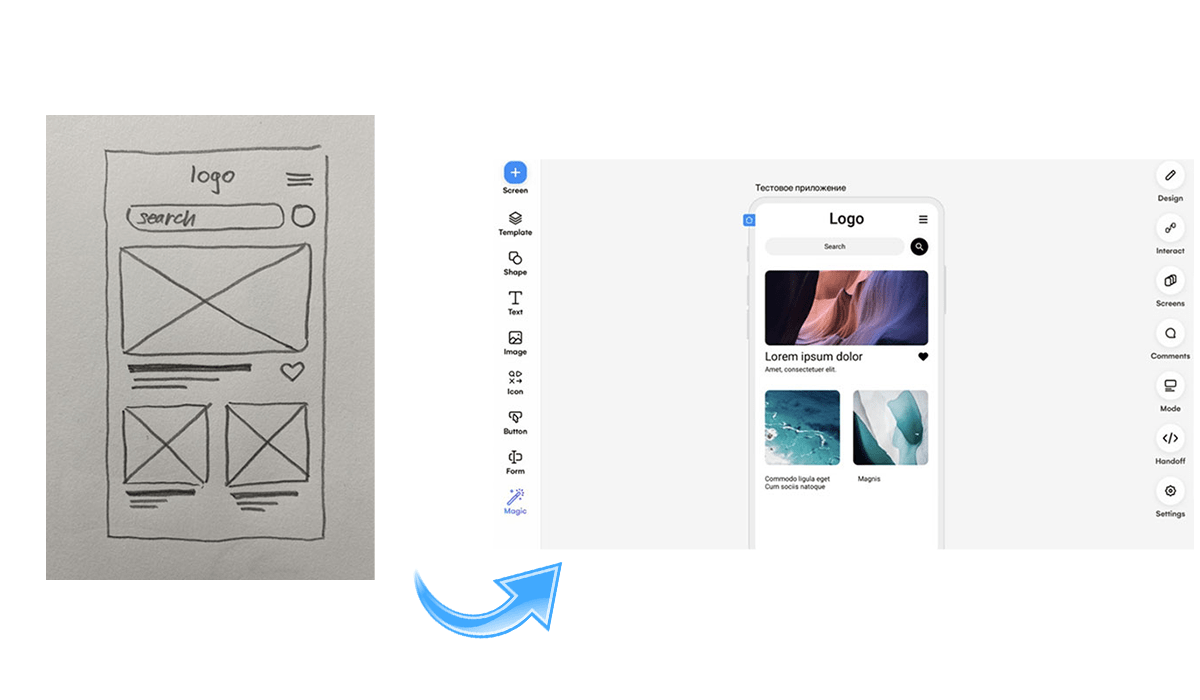
Let's briefly break down the pros and cons of using neural networks in web design:
Advantages:
Disadvantages:

Nothing can stop neural networks from developing and becoming more popular. The usefulness is grandiose, and the disadvantages are questionable. The very technology of machine learning implies rapid and steady growth.
A year ago, neural networks for video generation still caused laughter from the ridiculousness of what was happening on the screen, but today there are far fewer truly incongruous elements. Neural networks are suitable for use not only in web design, but also in education, perhaps even medicine in the near future, and for the profession of web designer the technology does not seem adequately replaceable even now.
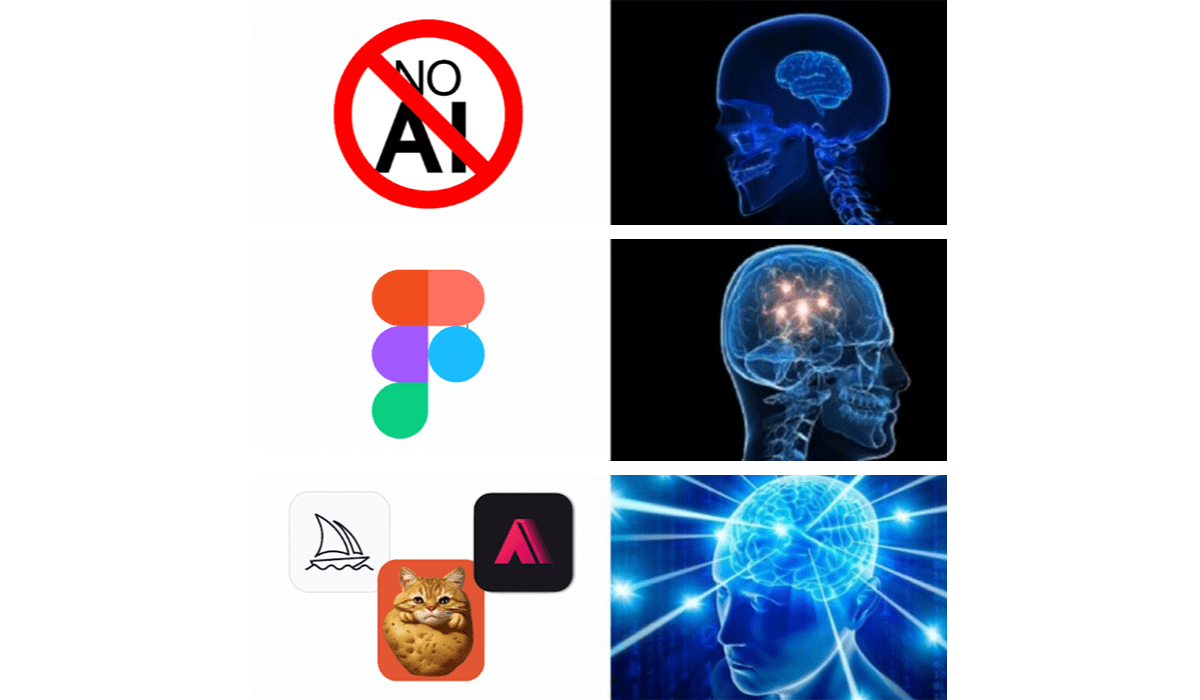
The second half of the 24th year in the sphere of content production and digital engineering is entirely under the banner of neural networks as the main tool for saving time and effort. In an ever-changing and adapting job market in a young field like web design, things are changing fast, and experimenting with new tools and technologies like neural networks fits perfectly into this state of affairs. Let's keep our finger on the pulse.
The Coddy School of Programming for Kids offers many website development courses that are perfect for kids and teens! Web development skills are more relevant than ever, and being able to create your own projects can open many doors in the future. Join us and launch your dream!